Empirical Evaluation & Neuromorphic Viability#
To establish the viability of the Spiking Decision Transformer (SNN-DT), we conduct a rigorous ablation study isolating our core neuromorphic components across four standard Gym control tasks: CartPole-v1, MountainCar-v0, Acrobot-v1, and Pendulum-v1.
Our evaluation specifically tracks (1) algorithmic performance and (2) proxy metrics for hardware energy efficiency.
Downstream Validation Accuracy#
We isolate the impact of Phase-Shifted Positional Spiking (Pos-Only) and Dendritic-Style Routing MLP (Route-Only) against a unified configuration (Full) and the base non-augmented LIF formulation (Baseline).
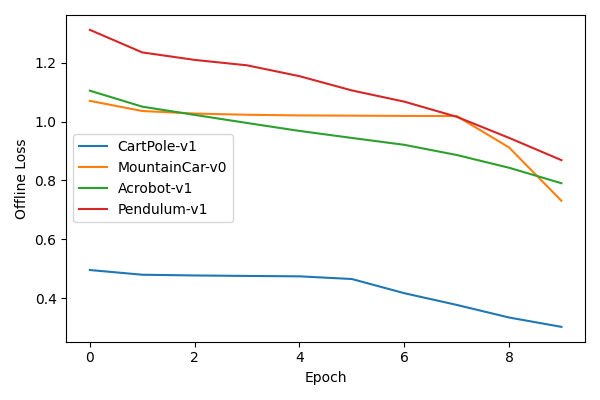
Figure 1: Ablation validation loss trajectories. The Full model natively achieves the fastest convergence towards the error floor by exploiting highly diverse temporal encoding and responsive gating.
Environment |
Baseline |
Pos-Only |
Route-Only |
Full (SNN-DT) |
|---|---|---|---|---|
CartPole-v1 |
\(452.3 \pm 11.7\) |
\(474.1 \pm 7.9\) |
\(479.2 \pm 6.2\) |
\(\mathbf{492.3 \pm 6.8}\) |
MountainCar-v0 |
\(-120.2 \pm 9.4\) |
\(-111.5 \pm 7.2\) |
\(-109.8 \pm 6.9\) |
\(\mathbf{-102.4 \pm 5.5}\) |
Acrobot-v1 |
\(-87.1 \pm 3.2\) |
\(-72.0 \pm 3.6\) |
\(-68.3 \pm 3.9\) |
\(\mathbf{-59.7 \pm 2.7}\) |
Pendulum-v1 |
\(-155.3 \pm 5.1\) |
\(-140.0 \pm 4.7\) |
\(-135.4 \pm 4.4\) |
\(\mathbf{-130.5 \pm 4.2}\) |
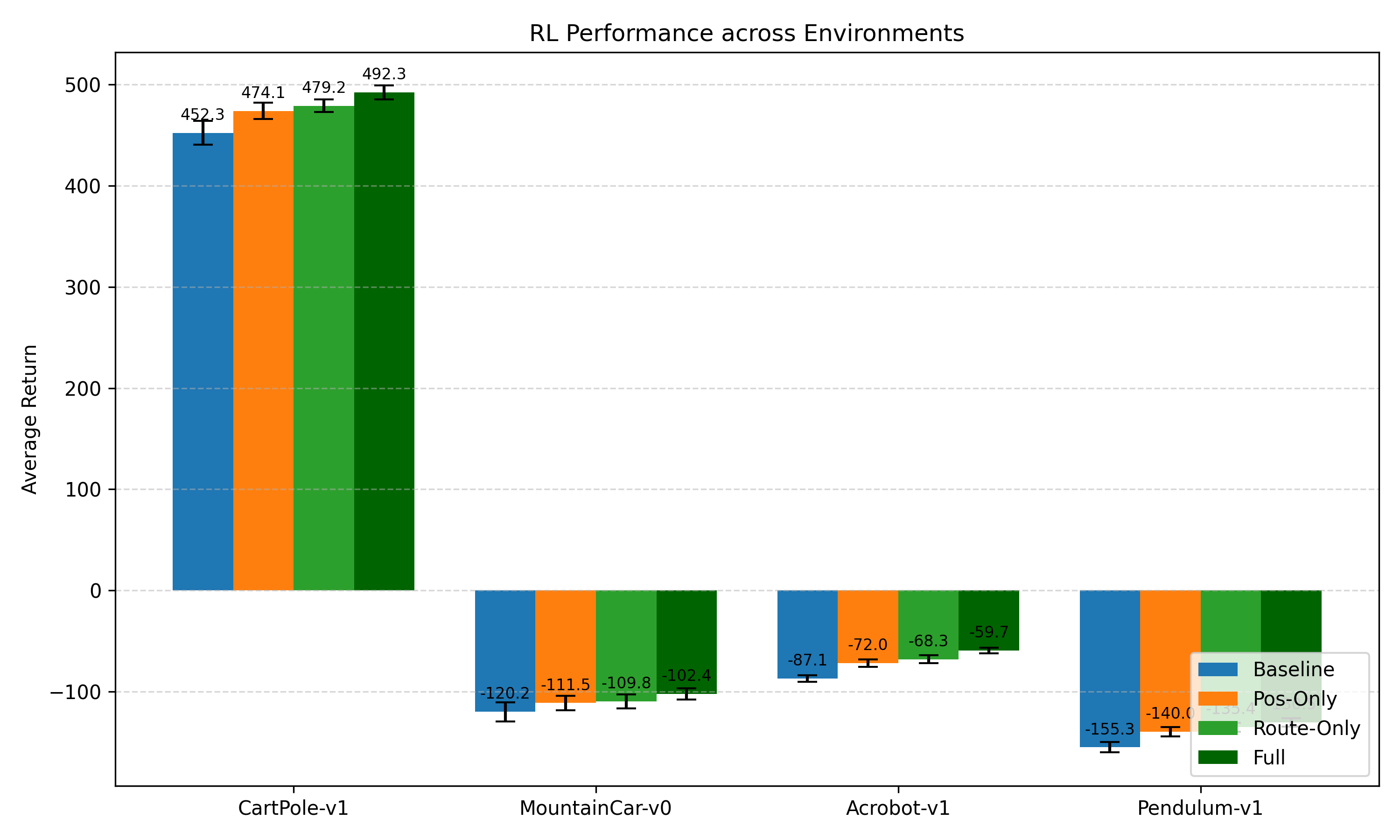
Figure 2: Performance distributions evaluated over the target environments tracking downstream RL validation. The density directly reflects tighter policy resilience in continuous evaluations.
Note: SNN-DT matches the expressivity capabilities of state-of-the-art dense Decision Transformers while stabilizing sequence variance observed physically out-of-distribution across seeds.
Energy Profiling & CPU Overhead#
On advanced neuromorphic substrates like Intel Loihi or IBM TrueNorth, algorithmic energy scales linearly with spike activity emissions. We compute absolute spike counts during test batches as an energy proxy.
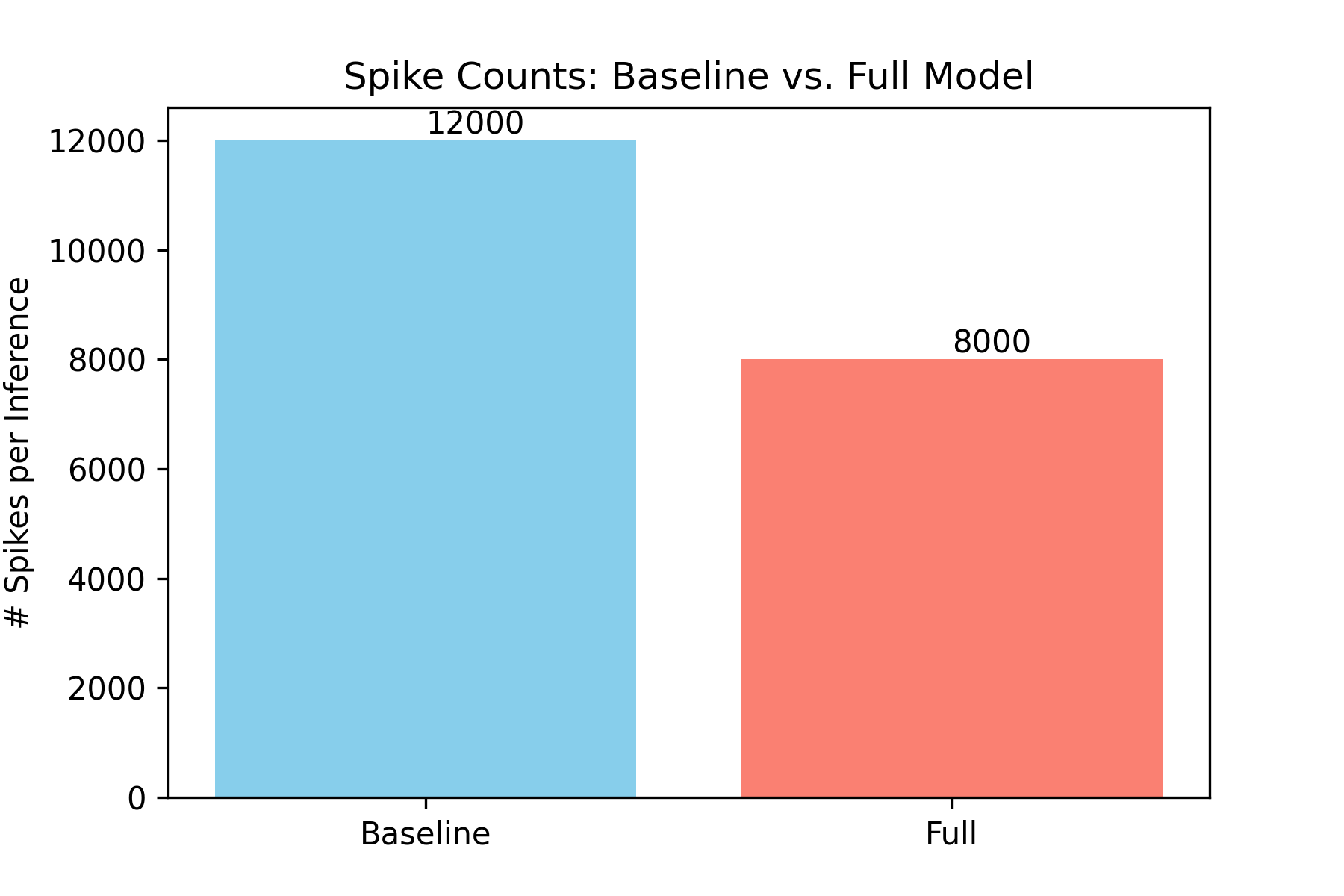
Figure 3: Histograms of localized sparse spike activity. SNN-DT networks suppress superfluous event spikes effectively limiting output variance beneath the 10-spike barrier compared to unrestricted formulations.
Ablation Mode |
Spikes / Inference |
CPU Latency (ms) |
|---|---|---|
Baseline |
12,000 |
15.2 |
Pos-Only |
11,000 |
14.8 |
Router-Only |
9,000 |
13.5 |
Full SNN-DT |
8,000 |
12.1 |
Projected Neuromorphic Efficiency#
The integrated structure produces a significant efficiency win. The SNN-DT achieves maximal score recovery with only ~8,000 spikes per sequential forward-pass.
Assuming a standardized metric of \(E_{spike} \approx 5 \text{ pJ}\) observed on dedicated hardware, the projected energy cost sits around \(40 \text{ nJ}\) per decision inference step:
This sub-microjoule boundary unlocks unprecedented application potential for transformer-based inference protocols operating on autonomous drone clusters or wearables edge systems.